
In CNC and plasma cutting systems, the integration of control hardware, motion drivers, and process-specific sensing technologies determines not only performance, but also operational precision and reliability. As these systems evolve, the distinction between controller, driver, and feedback mechanisms becomes increasingly important. Each layer must function in coordination to ensure that motion execution, electrical control, and real-time adjustments are aligned with the demands of the cutting process.
This article examines four technically interconnected topics: PoKeys57CNCpro4x25, CNC controller with drivers, Torch height control, and plasma sens out vs plasma sens. These elements represent different but complementary aspects of CNC and plasma system architecture. PoKeys57CNCpro4x25 illustrates an integrated hardware solution, a CNC controller with drivers highlights combined control and actuation, Torch height control addresses process-specific precision, and plasma sens out vs plasma sens explores signal interpretation critical to safe and accurate operation.
The discussion is structured into four chapters, each presented as a focused question followed by a detailed explanation. The objective is to clarify not only what these components are, but how they interact within real-world systems. By examining these topics together, a coherent understanding emerges of how modern CNC and plasma cutting solutions achieve both control accuracy and process stability.
What is PoKeys57CNCpro4x25 and how does it function in advanced CNC systems?
PoKeys57CNCpro4x25 is an integrated motion control device that combines a CNC controller with built-in stepper motor drivers, forming a compact and unified solution for machine control. Unlike conventional architectures where the controller and drivers are separate components, PoKeys57CNCpro4x25 consolidates these functions into a single unit. This integration simplifies system design while maintaining the precision and reliability required in CNC and plasma applications.
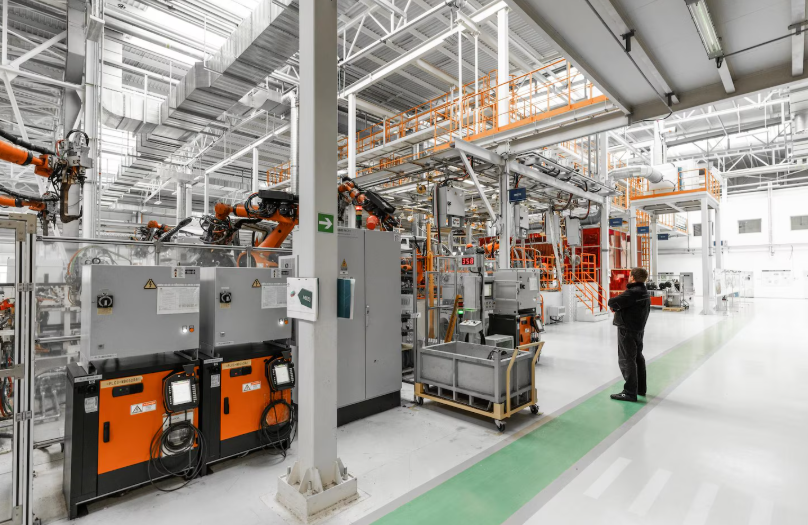
At its core, PoKeys57CNCpro4x25 operates as both a motion controller and a power stage for driving stepper motors. It receives motion commands from control software, processes them internally, and directly generates the electrical signals required to move machine axes. Because the drivers are integrated, signal latency and wiring complexity are reduced, resulting in more stable and predictable motion behavior. This is particularly advantageous in systems where synchronization and timing accuracy are critical.
One of the defining features of PoKeys57CNCpro4x25 is its multi-axis capability. As indicated by its configuration, it supports control of multiple axes with dedicated driver channels. This makes PoKeys57CNCpro4x25 suitable for a wide range of machines, including CNC routers, milling machines, and plasma cutters. In plasma applications, where rapid directional changes and consistent motion are required, the stability provided by PoKeys57CNCpro4x25 becomes especially important.
PoKeys57CNCpro4x25 also includes a comprehensive set of input/output options, allowing it to interface with limit switches, sensors, and auxiliary systems. This enables integration with process-specific features such as Torch height control, where real-time feedback must be processed to maintain correct cutting conditions. By handling both motion and signal interfacing, PoKeys57CNCpro4x25 acts as a central control hub within the machine architecture.
Another important aspect of PoKeys57CNCpro4x25 is its compatibility with established CNC control software. It is commonly used in conjunction with platforms that require precise motion execution and flexible configuration. Through this integration, PoKeys57CNCpro4x25 translates high-level instructions into coordinated axis movement, ensuring that tool paths are followed accurately.
From a design perspective, PoKeys57CNCpro4x25 reduces the need for external wiring and separate driver modules. This not only simplifies installation but also minimizes potential points of failure. Fewer connections mean lower susceptibility to electrical noise and mechanical faults, which contributes to overall system reliability.
In summary, PoKeys57CNCpro4x25 is a highly integrated solution that combines motion control and motor driving within a single device. By reducing system complexity while maintaining precise control, PoKeys57CNCpro4x25 provides an efficient and reliable foundation for advanced CNC and plasma cutting systems.
What is a CNC controller with drivers and how does it improve system efficiency?
A CNC controller with drivers is an integrated system that combines motion control logic with the power electronics required to drive stepper or servo motors. In traditional CNC architectures, the controller and motor drivers are separate components: the controller generates step and direction signals, while external drivers convert those signals into electrical current sufficient to move the motors. A CNC controller with drivers consolidates these functions into a single unit, streamlining both design and operation.
At a functional level, a CNC controller with drivers receives high-level motion commands from control software and directly manages motor actuation. This eliminates the need for intermediary signal transmission between separate devices, reducing latency and the potential for signal degradation. As a result, motion becomes smoother and more consistent, which is particularly important in applications requiring precise interpolation and high-speed operation.
One of the principal advantages of a CNC controller with drivers is reduced system complexity. By integrating control and power stages, the number of required components is minimized. This leads to simpler wiring, fewer connection points, and a more compact overall system layout. Devices such as PoKeys57CNCpro4x25 exemplify this approach, demonstrating how a CNC controller with drivers can serve as a central control unit while maintaining high performance.
Reliability is another significant benefit. In systems where separate controllers and drivers are used, improper wiring or signal interference can lead to communication errors or unstable motor behavior. A CNC controller with drivers mitigates these risks by internalizing the signal path. The close coupling between logic and actuation ensures that commands are executed with consistent timing and minimal external disturbance.
From a performance perspective, a CNC controller with drivers allows for optimized coordination between axes. Because both control logic and driver behavior are managed within the same system, parameters such as acceleration, deceleration, and current control can be finely tuned. This results in improved motion dynamics and reduced mechanical stress on the machine.
Integration with auxiliary systems is also facilitated by a CNC controller with drivers. Inputs from sensors, limit switches, or systems such as Torch height control can be processed directly within the controller, enabling real-time adjustments during operation. In plasma cutting environments, where signal interpretation—such as plasma sens out vs plasma sens—can influence process behavior, this level of integration becomes particularly valuable.
In summary, a CNC controller with drivers enhances system efficiency by combining control and actuation into a unified platform. By reducing complexity, improving signal integrity, and enabling tighter coordination of machine functions, a CNC controller with drivers provides a robust and effective solution for modern CNC and plasma cutting systems.
What is Torch height control and why is it essential in plasma cutting?
Torch height control is a critical subsystem in plasma cutting machines, responsible for maintaining the correct distance between the plasma torch and the workpiece during operation. This distance directly affects arc stability, cut quality, and consumable lifespan. Torch height control ensures that the torch follows surface variations in real time, compensating for material inconsistencies, warping, or mechanical tolerances.
At a technical level, Torch height control operates by monitoring arc voltage, which correlates with the distance between the torch and the material. As the torch moves closer or farther from the surface, the voltage changes accordingly. The Torch height control system interprets these variations and adjusts the Z-axis position to maintain a consistent gap. This closed-loop control mechanism is essential for achieving uniform cutting conditions.
The importance of Torch height control becomes particularly evident when working with large or uneven materials. Without effective Torch height control, the torch may drift too close to the surface, risking collision or excessive wear, or move too far away, resulting in poor cut quality and incomplete penetration. By continuously adjusting position, Torch height control preserves both safety and precision.
Integration is a key aspect of Torch height control. It must operate in coordination with the primary motion system, often managed by a CNC controller with drivers or a device such as PoKeys57CNCpro4x25. The system receives motion commands for X and Y axes while independently adjusting the Z-axis based on real-time feedback. This simultaneous control ensures that cutting paths are followed accurately while maintaining optimal torch positioning.
Another critical element of Torch height control is signal interpretation. The system must correctly process voltage signals, which may involve distinguishing between different outputs such as plasma sens out vs plasma sens. Accurate interpretation of these signals ensures that adjustments are based on valid arc conditions rather than noise or transient states.
Reliability and responsiveness are essential characteristics. Torch height control systems must react quickly to changes without introducing instability or oscillation. Proper tuning of control parameters ensures smooth adjustments, preventing abrupt movements that could disrupt the cutting process.
In summary, Torch height control is indispensable in plasma cutting applications. By maintaining a consistent torch-to-material distance through real-time feedback, Torch height control ensures stable arc conditions, high-quality cuts, and prolonged equipment life.
What is the difference between plasma sens out vs plasma sens and why does it matter?
The distinction between plasma sens out vs plasma sens relates to signal handling within plasma cutting systems, particularly in the context of arc detection and process control. These two signals, while closely related, serve different roles in communicating the state of the plasma arc to the control system. Understanding plasma sens out vs plasma sens is essential for correct system configuration, especially when integrating Torch height control and motion controllers such as PoKeys57CNCpro4x25.
At a functional level, plasma sens typically refers to the raw signal indicating the presence of a plasma arc. This signal is generated by the plasma power source and reflects whether the arc has been successfully initiated. It is often used as a basic input for safety and process validation, ensuring that motion or further operations proceed only when cutting conditions are established.
In contrast, plasma sens out is generally a conditioned or processed version of the original signal. The plasma sens out signal may be buffered, isolated, or delayed to meet the requirements of the control system. This distinction is critical because raw signals can contain noise, voltage fluctuations, or transient states that are not suitable for direct interpretation by sensitive electronics. By using plasma sens out, the system ensures that the signal being acted upon is stable and reliable.
The importance of understanding plasma sens out vs plasma sens becomes evident during system integration. Controllers such as a CNC controller with drivers or integrated units like PoKeys57CNCpro4x25 rely on clean and correctly timed input signals. If the wrong signal type is used—for example, connecting a raw plasma sens signal where a conditioned plasma sens out is expected—the system may misinterpret arc status. This can lead to premature motion, failure to engage Torch height control, or interruptions in the cutting process.
Another key consideration in plasma sens out vs plasma sens is electrical compatibility. The raw plasma sens signal may operate at voltage levels or signal characteristics that are not directly compatible with controller inputs. The plasma sens out signal typically addresses this by providing proper isolation and voltage scaling. This ensures safe interfacing and prevents damage to control electronics.
From an operational perspective, plasma sens out vs plasma sens also affects timing. Plasma cutting involves distinct phases, including arc initiation, pierce delay, and steady-state cutting. The control system must respond appropriately to each phase, and accurate signal interpretation is essential. Using the correct signal—plasma sens out where required—ensures that these transitions occur in a controlled and predictable manner.
In summary, the difference between plasma sens out vs plasma sens lies in the distinction between raw and conditioned arc detection signals. Correct understanding and application of plasma sens out vs plasma sens are crucial for ensuring reliable communication between the plasma source and the control system, directly impacting both safety and cutting performance.
Conclusion
The topics explored—PoKeys57CNCpro4x25, CNC controller with drivers, Torch height control, and plasma sens out vs plasma sens—collectively define a critical segment of modern CNC plasma system architecture. Each component addresses a specific requirement: PoKeys57CNCpro4x25 provides integrated motion control and driving capability, a CNC controller with drivers simplifies system design and improves efficiency, Torch height control ensures process precision, and plasma sens out vs plasma sens governs accurate signal interpretation.
Their interaction is central to system performance. Motion control must be precise, signal handling must be reliable, and process feedback must be interpreted correctly. A failure in any one of these areas can compromise the entire operation, whether through poor cut quality, equipment damage, or unsafe conditions. When properly integrated, however, these elements form a cohesive system capable of delivering consistent and high-quality results.
As CNC plasma technology continues to develop, the emphasis on integration, signal clarity, and real-time control will remain fundamental. A thorough understanding of PoKeys57CNCpro4x25, the role of a CNC controller with drivers, the function of Torch height control, and the distinction between plasma sens out vs plasma sens provides a solid basis for designing and maintaining efficient and reliable cutting systems.
